


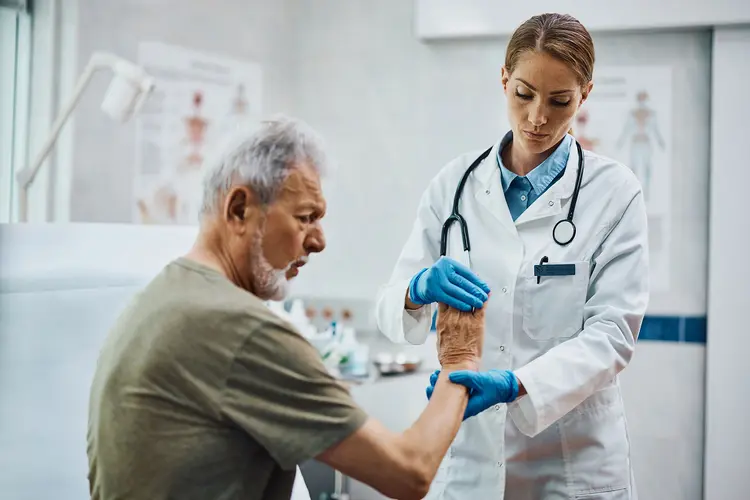
Treating Damaged Joints
Total joint replacement, or arthroplasty, is a surgical procedure where a surgeon removes damaged bone and cartilage and replaces them with artificial components. These parts recreate the shape and motion of a natural joint, and they may be made from metal, plastic, or ceramic. Knees are one of the most commonly replaced joints. Surgeons also replace:
- Hips
- Shoulders
- Ankles
- Elbows
A surgeon may discuss joint replacement with patients who have osteoarthritis, rheumatoid arthritis, or joint damage from a previous injury. These conditions affect the smooth cartilage that lets joint surfaces glide against each other. Before recommending surgery, your surgeon reviews your health history and examines the joint; they may also order imaging. Many patients try nonsurgical approaches first, which helps establish whether surgery is the right direction.
Once you and your orthopedic surgeon agree to move forward, you may receive pre-surgery instructions. The procedure typically takes place in a hospital or surgical center, and recovery varies by joint and by person. Ask your care team for a clear timeline so you can arrange support at home and plan time away from work accordingly.
Addressing Nerve Entrapment Conditions
Peripheral nerves carry signals between the spinal cord and the rest of the body, and surrounding tissue sometimes presses on or binds a nerve. Scar tissue, thickened tendons, or tight ligaments can be the culprit. Carpal tunnel syndrome and cubital tunnel syndrome are two examples of this type of nerve entrapment. Peripheral nerve hydrodissection is a minimally invasive procedure designed to address these situations.
During the procedure, a provider uses ultrasound to view the nerve and adjacent tissue in real time. Using live imaging, the provider injects a saline-based fluid around the nerve to separate it from surrounding tissue. The procedure typically takes place in an office setting; patients go home the same day, and no hospital stay is required. Before your appointment, ask how long the visit lasts and how many sessions your provider recommends.
Managing Soft Tissue Injuries
Platelet-rich plasma (PRP) therapy uses a concentrated portion of your own blood. Platelets carry proteins called growth factors that support the body’s natural repair processes, and PRP therapy delivers a higher concentration of those platelets directly to an injured area. Providers may use this approach for soft tissue concerns such as tendon injuries, ligament sprains, muscle strains, and sports injuries.
The process follows a straightforward sequence:
- A provider draws a small blood sample from your arm.
- A centrifuge spins the sample to concentrate the platelets.
- The provider injects the concentrate into the treatment area, frequently with ultrasound guidance.
- Your provider gives you activity guidelines for recovery.
Start Your Orthopedic Care
Orthopedic surgeons address a wide range of conditions involving bones, joints, nerves, and soft tissue. Total joint replacement rebuilds damaged joints, and peripheral nerve hydrodissection releases entrapped nerves. PRP therapy supports recovery from strains, sprains, and sports injuries. Each treatment serves a distinct purpose, and your provider can help you determine the right fit. Schedule a consultation with an orthopedic specialist and bring a list of questions to make the most of your visit.
