


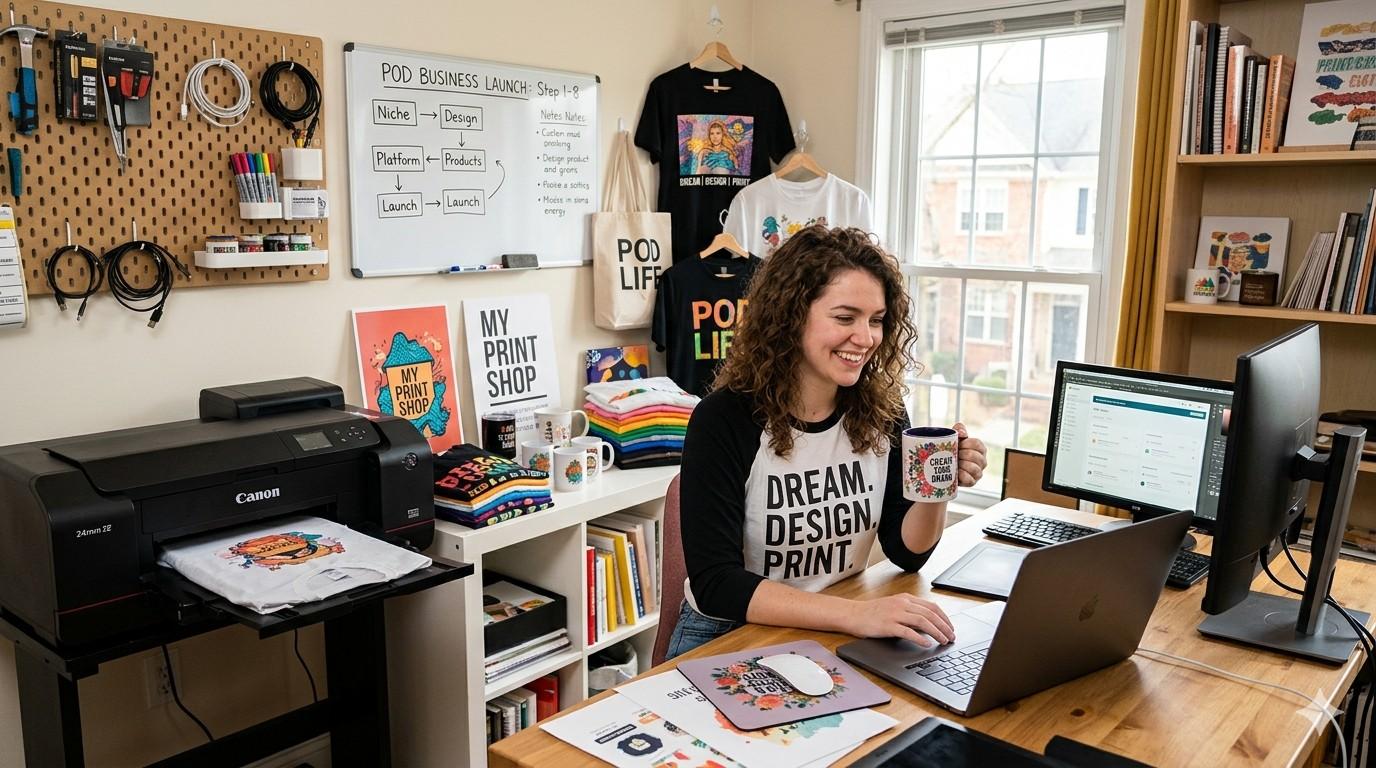
If you’re looking for a low-risk way to start an online business, learning how to start a print-on-demand business could be one of the smartest decisions you make in 2025.
Unlike traditional e-commerce, print on demand (POD) allows you to sell custom products without holding inventory. Products are printed only after a customer places an order, which means you don’t need a warehouse, large startup capital, or shipping operations.
The global e-commerce market continues to grow, and personalized products remain in high demand. From custom t-shirts and hoodies to mugs, posters, phone cases, and tote bags, print-on-demand allows entrepreneurs to build a brand with minimal upfront investment.
This guide covers everything you need to know about how to start a print-on-demand business, from choosing a niche to generating your first sales.
What Is a Print-on-Demand Business?
A print-on-demand business is an e-commerce model where products are customized with your designs and printed only when customers place orders.
Instead of buying inventory in bulk, you work with a POD supplier that handles:
- Printing
- Packaging
- Shipping
- Order fulfillment
Your role is to:
- Create designs
- Build an online store
- Market your products
- Manage customer relationships
This model significantly reduces financial risk compared to traditional retail.
How Print on Demand Works
- Create a design.
- Upload it to a POD platform.
- Add products to your online store.
- A customer places an order.
- The POD supplier prints and ships the item.
- You keep the profit margin.
Why Start a Print on Demand Business in 2025?
The print-on-demand industry continues to attract entrepreneurs because of its accessibility and scalability.
Key Benefits
- Low startup costs
- No inventory management
- Global customer reach
- Easy automation
- Flexible product selection
- Ability to test ideas quickly
Many successful e-commerce brands started with a single product and expanded after validating demand.
How to Start a Print-on-Demand Business Step by Step
1. Choose a Profitable Niche
The biggest mistake beginners make is trying to sell to everyone.
Successful print-on-demand stores target specific audiences rather than broad markets.
Examples include:
- Fitness enthusiasts
- Pet lovers
- Teachers
- Nurses
- Gamers
- Gardeners
- Coffee lovers
- Travelers
- Car enthusiasts
- Remote workers
How to Validate a Niche
Look for:
- Passionate communities
- Consistent demand
- Active social media groups
- Existing successful competitors
- Opportunities to create unique designs
A niche with engaged buyers is often more profitable than a broad audience.
How to Start a Print-on-Demand Business with Market Research
Before creating products, understand what customers already buy.
Analyze Competitors
Study:
- Best-selling products
- Customer reviews
- Design styles
- Pricing strategies
- Marketing channels
Look for gaps you can fill.
For example, if competitors focus on generic fitness shirts, you might create products specifically for powerlifters, marathon runners, or yoga instructors.
Use Keyword Research
Search for:
- print on demand niches
- custom t-shirt business ideas
- trending ecommerce products
- personalized gift ideas
- profitable POD niches
Keyword research helps identify customer demand before investing time in product creation.
Select the Right Print on Demand Platform
Choosing a reliable supplier is critical.
Popular POD platforms include:
- Printful
- Printify
- Gelato
- Gooten
- TeeLaunch
- SPOD
When comparing suppliers, consider:
- Product quality
- Shipping times
- Production costs
- Global fulfillment locations
- Product catalog
- Customer support
Always order samples before selling products.
Create Designs That Sell
Many beginners assume great artwork alone creates sales.
In reality, successful designs solve emotional needs, express identity, or make people laugh.
Design Ideas That Perform Well
- Funny quotes
- Inspirational messages
- Profession-specific designs
- Hobby-related artwork
- Pet-themed graphics
- Seasonal products
- Personalized designs
Design Tools
You don’t need to be a professional designer.
Popular tools include:
- Canva
- Adobe Illustrator
- Photoshop
- Affinity Designer
- Kittl
If design isn’t your strength, consider hiring freelancers or purchasing commercial-use graphics.
Build Your Online Store
To learn how to start a print-on-demand business successfully, you need a professional storefront.
Best E-commerce Platforms
Shopify
Ideal for long-term brand building.
Benefits:
- Easy setup
- Large app ecosystem
- POD integrations
- Strong scalability
Etsy
Great for beginners seeking built-in traffic.
Benefits:
- Existing customer base
- Lower marketing requirements
- Faster product validation
WooCommerce
A flexible option for WordPress users.
Benefits:
- Full ownership
- Lower monthly costs
- Extensive customization
Many entrepreneurs start on Etsy and later expand to Shopify.
Price Your Products for Profit
Pricing mistakes can destroy profitability.
Basic Pricing Formula
Product Cost + Shipping + Marketing Expenses + Desired Profit Margin
Example:
| Expense | Cost |
| Product Base Cost | $12 |
| Shipping | $5 |
| Marketing | $3 |
| Total Cost | $20 |
If sold for $34.99:
Profit = $14.99
Always account for:
- Advertising costs
- Refunds
- Discounts
- Platform fees
H2: How to Start a Print-on-Demand Business and Drive Traffic
A store without traffic won’t generate sales.
Marketing is often more important than product creation.
Social Media Marketing
Focus on platforms where your audience spends time.
Popular channels:
- TikTok
- YouTube Shorts
Post consistently and showcase products in real-life scenarios.
Content Marketing
Create content around:
- Your niche
- Product usage
- Gift guides
- Customer stories
This strategy can generate organic traffic for years.
Influencer Marketing
Micro-influencers often deliver better returns than celebrity endorsements.
Look for:
- High engagement
- Niche relevance
- Authentic audiences
Email Marketing
Build an email list from day one.
Use it for:
- Product launches
- Discounts
- Seasonal campaigns
- Customer retention
Email marketing remains one of the highest ROI channels in e-commerce.
Optimize Your Store for Conversions
Traffic alone isn’t enough.
Your store should convert visitors into customers.
Essential Conversion Elements
- High-quality product images
- Detailed descriptions
- Customer reviews
- Fast-loading pages
- Mobile-friendly design
- Clear shipping policies
- Easy checkout process
Improve Product Descriptions
Instead of:
“Funny coffee mug.”
Write:
“Perfect for coffee lovers who can’t start their day without caffeine. This durable ceramic mug combines humor and functionality for everyday use.”
Benefits sell better than features.
Common Mistakes New POD Entrepreneurs Make
Avoiding these mistakes can save months of frustration.
Choosing an Oversaturated Niche
Competing against thousands of generic stores is difficult.
Focus on specific communities instead.
Ignoring Product Quality
Poor reviews can destroy a brand quickly.
Always test products personally.
Relying on One Traffic Source
Diversify traffic through:
- SEO
- Social media
- Email marketing
- Paid ads
- Influencer partnerships
Uploading Too Many Generic Designs
Quality beats quantity.
Ten targeted designs often outperform hundreds of random products.
How Much Does It Cost to Start a Print-on-Demand Business?
One reason many people research how to start a print-on-demand business is the low startup cost.
Typical beginner budget:
| Item | Estimated Cost |
| Domain Name | $10–20/year |
| Shopify Subscription | $39+/month |
| Design Software | Free–$50/month |
| Product Samples | $50–200 |
| Marketing Budget | $100–500+ |
| Total Startup Cost | $200–800+ |
You can start even cheaper by using Etsy and free design tools.
How Long Does It Take to Make Money?
Results vary significantly.
Some stores generate sales within days.
Others require several months of testing and optimization.
Factors affecting success:
- Niche selection
- Product quality
- Marketing strategy
- Design uniqueness
- Customer targeting
Most successful POD businesses continuously test new products and marketing campaigns.
Scaling Your Print on Demand Business
Once you gain traction, focus on growth.
Expansion Strategies
- Launch additional products
- Create product bundles
- Enter new niches
- Build an email list
- Invest in paid advertising
- Expand internationally
- Develop a recognizable brand
Long-term success comes from building a brand rather than selling random products.
Frequently Asked Questions
Is print-on-demand still profitable in 2025?
Yes. Profitability depends on niche selection, branding, product quality, and marketing execution. Businesses that target specific audiences often perform better than generic stores.
Can I start a print-on-demand business with no money?
You can start with very little money using free design tools and marketplaces like Etsy. However, a small marketing budget usually helps accelerate growth.
What products sell best in print-on-demand?
Popular products include:
- T-shirts
- Hoodies
- Mugs
- Phone cases
- Tote bags
- Posters
- Sweatshirts
- Stickers
The best product depends on your niche audience.
Do I need design skills?
No. Many successful sellers use beginner-friendly tools or outsource design work to freelancers.
Is Shopify or Etsy better for print-on-demand?
Etsy is often easier for beginners due to built-in traffic. Shopify offers greater control, branding opportunities, and long-term scalability.
Conclusion
Learning how to start a print-on-demand business is one of the most accessible ways to enter e-commerce in 2025. With low startup costs, no inventory requirements, and access to global markets, POD offers a practical path for entrepreneurs who want to build an online brand.
Success comes from choosing the right niche, creating products that resonate with a specific audience, partnering with reliable suppliers, and consistently marketing your store. Instead of chasing trends, focus on building a recognizable brand that solves a need or connects with a passionate community.
Start small, test frequently, analyze results, and improve continuously. The businesses that win in print on demand are not always the ones with the most products—they are the ones that understand their customers best.
