


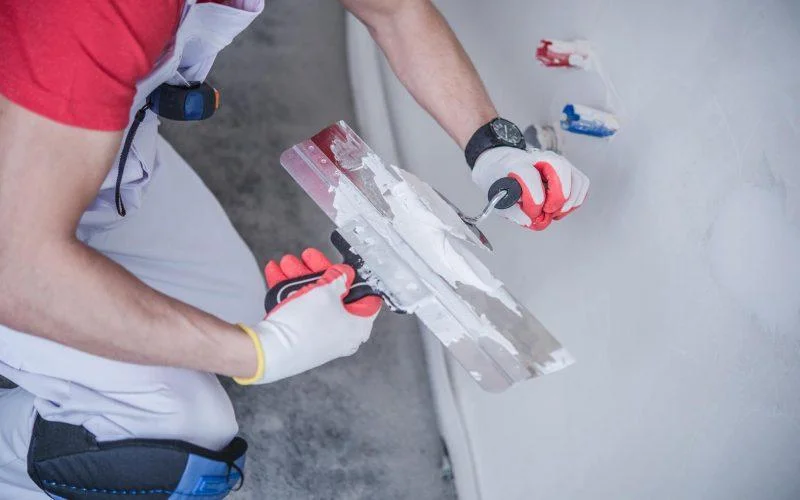
Drywall damage is often a symptom of underlying issues, and the visible surface may represent only part of the problem. Because factors such as moisture intrusion, structural movement, aging fasteners, and remodeling changes affect drywall in different ways, each type of damage requires a targeted repair approach. A handyman begins by evaluating the condition of the wall and restoring the surface so it blends with the surrounding finish. Here is the role of a handyman in drywall repair:
Evaluating Drywall Damage
Drywall repair starts with identifying wall conditions before selecting materials or repair methods. Service assessments may include nail pops, screw dimples, hairline cracks, dents, holes, and softened drywall. The repair scope is based on the type and extent of the damage, with small holes from removed fixtures typically receiving patch repairs and larger or compromised areas requiring partial drywall replacement.
Some repairs require re-securing drywall before finishing to restore stability and prevent recurring defects. After evaluating the condition of the wall, water-damaged or softened drywall may require replacement when the material no longer provides a stable surface for finishing. Nail pops are addressed by securing the drywall and repairing the affected area, while joint compound is applied, smoothed, and sanded to create a consistent finish.
Skim coating is used after stabilization and repair work when needed to improve surface uniformity across affected areas. Repair and replacement methods vary depending on the location and condition of the damaged wall surface. Older homes may contain plaster systems rather than drywall, so identifying the wall type helps determine the appropriate repair process before work begins.
Matching Texture Finish
Repair includes texture matching as part of the finishing process for repaired wall surfaces. Drywall finishing involves patching, sanding, and preparing repaired areas to blend with the surrounding wall. Matching textures and finishes are applied based on the existing surface conditions, while skim coating is used to create a more uniform surface when needed. Professionals apply joint compound over repaired sections, then smooth the surface and prepare it for paint. The completed work results in a consistent, paint-ready wall surface.
Repairing Common Drywall Defects
Repair includes patching, replacement, compound application, and sanding to restore damaged wall surfaces. The process addresses issues such as holes and cracks while preparing the repaired area for final finishing. Small openings receive patch installation, while damaged sections requiring removal are restored with replacement material. Joint compound is applied over repaired areas to create an even surface; this is followed by sanding to prepare the wall for painting.
Screw dimple repair involves filling recessed fastener locations and refining the surface through controlled application and smoothing techniques. After the compound cures, sanding removes excess material and improves surface uniformity. Final preparation leaves the repaired section with a consistent texture and finish suitable for subsequent wall treatments.
Hire a Handyman for Drywall Repair
Professional drywall repair restores interior wall surfaces to a finished and functional condition after damage occurs. Handymen address issues such as holes, cracks, and surface imperfections by applying appropriate repair and finishing techniques. A properly completed repair improves the appearance and condition of the wall while helping maintain a consistent interior finish. Contact a professional handyman service today to schedule a repair.
