


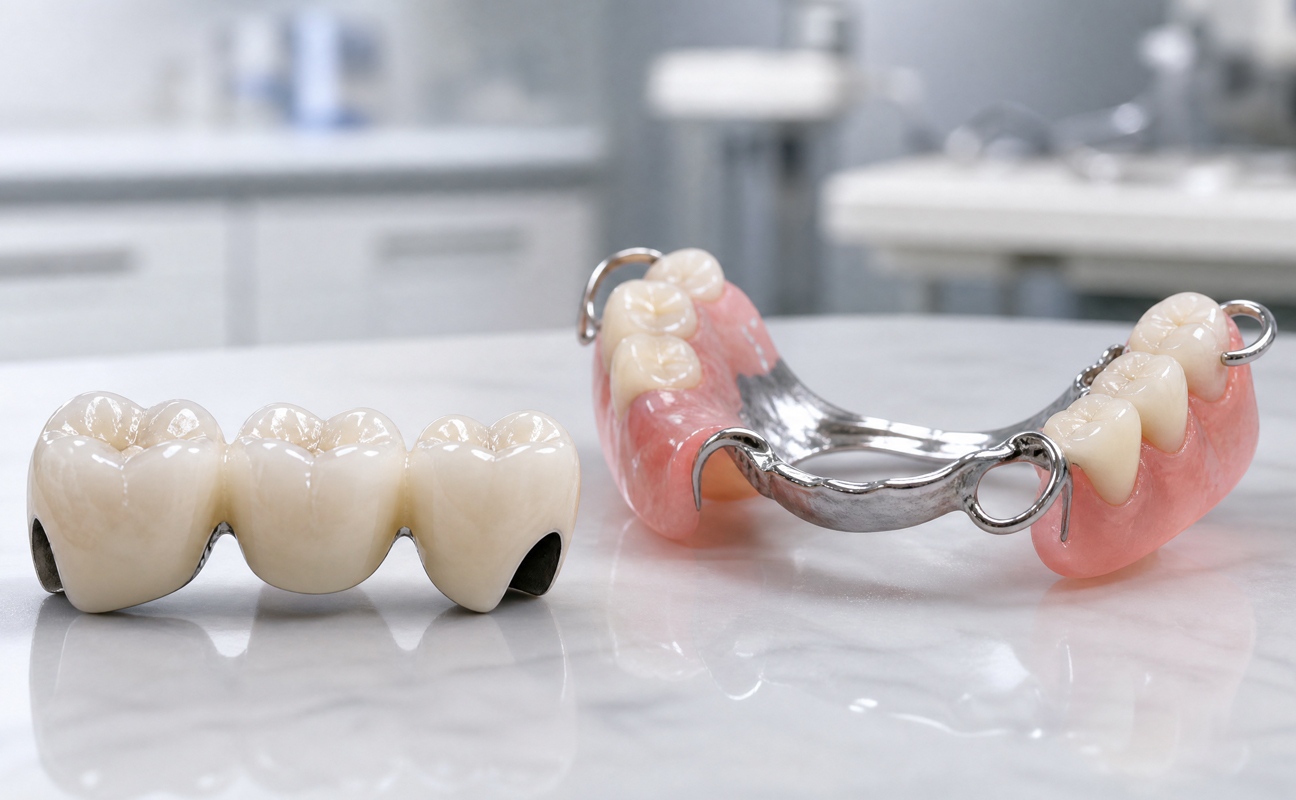
Missing teeth affect more than the appearance of a smile; gaps left behind can alter the way a person chews, speaks, and maintains the alignment of surrounding teeth. Dental bridges represent one of the long-standing methods for addressing these gaps. For anyone exploring options to restore a complete set of teeth, understanding how a bridge works may be beneficial.
What Is a Dental Bridge?
A dental bridge is a fixed restoration designed to fill the space created by one or more missing teeth, and it bridges the gap between remaining natural teeth. The device typically consists of two main parts. This includes the pontic, which is the artificial tooth that occupies the empty space, and the abutments, which are the supporting structures anchored to the teeth on either side of the gap.
Bridges come in several forms. A traditional bridge uses crowns placed over the adjacent natural teeth to hold the pontic securely in place. In some cases, an implant-supported bridge anchors the restoration to dental implants set into the jaw. The materials used to make these crowns are typically selected to match the color and function of the surrounding teeth, and this can include porcelain.
What Does the Process Involve?
Placing a dental bridge may require more than one visit to a dental office. During the first appointment, the dentist examines the area and prepares the abutment teeth. For a traditional bridge, this preparation may involve reshaping the adjacent teeth so that crowns can fit over them; the amount of reshaping depends on the type of bridge chosen.
After preparation, the dentist takes impressions or digital scans of the teeth. These records serve as the blueprint for a dental laboratory, and the people there fabricate the custom bridge to fit the patient’s mouth precisely. The dentist often places a temporary bridge to protect the exposed teeth and gums in the interim.
The dentist removes the temporary bridge at the following appointment; they then check the fit and color of the permanent restoration. Adjustments may be made to achieve a comfortable bite and natural appearance. Once the fit meets expectations, the dentist cements the bridge into position. For implant-supported bridges, the timeline extends further, since the implants must integrate with the jawbone before the final restoration is attached. Follow-up visits allow the dentist to monitor how well the bridge functions over time.
What Are the Benefits?
Dental bridges offer several practical advantages for individuals with missing teeth. One clear benefit is the restoration of chewing function, and a bridge can make eating a wide variety of foods manageable. Speech may also improve, since gaps in the teeth affect how certain sounds are formed.
Beyond function, bridges help maintain the shape of the face. When teeth are lost, the surrounding structures may shift, and a bridge can support a more balanced appearance. Filling the gap also helps prevent neighboring teeth from drifting into the empty space, which supports proper alignment of the bite. Compared with removable options, such as dentures, a fixed bridge stays in place and does not require nightly removal. A well-made bridge can serve its purpose for many years.
Confer With a Dentist
The right approach to replace missing teeth depends on many factors, including the gap’s location and the surrounding teeth. A dentist can evaluate these details, and they will explain which type of restoration aligns with a person’s specific needs. Speaking with a dental professional is a reliable way to make an informed decision about restoring a complete and functional smile.
