


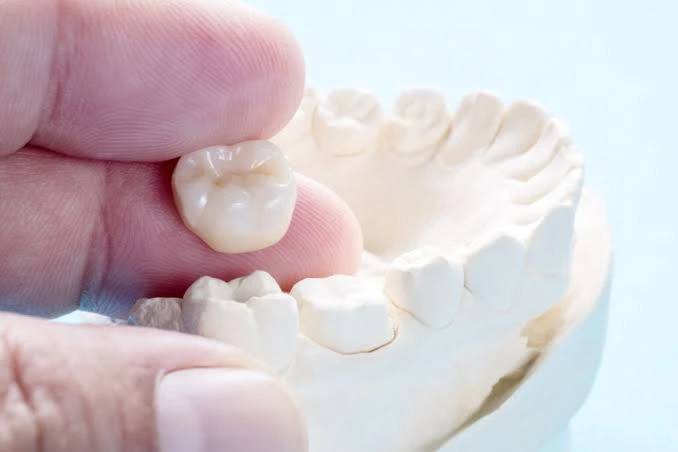
Crowns are dental restorations that cover and protect teeth weakened by decay, fractures, large fillings, or root canal treatment. They can also restore the shape, function, and appearance of damaged or severely worn teeth. Here are several situations in which dental crowns become necessary:
Repairing Severely Damaged Teeth
A tooth that has cracked, broken, or worn down often needs more than a filling to work properly again. Crowns cover the visible portion of the tooth, and they hold the weakened structure together so you can chew comfortably. Here are several situations that point toward the need for a crown to repair damage:
- Large cavities: When decay removes too much of the natural tooth, a crown restores strength that a filling cannot provide.
- Fractured teeth: A crown holds cracked pieces together and shields the tooth from further breakage.
- Worn enamel: Grinding or long-term wear can flatten teeth, and a crown rebuilds the surface for normal function.
A dentist evaluates the extent of damage before suggesting this option.
Completing Dental Procedures
Some dental treatments finish with a crown to protect the tooth and restore its full function. After a root canal, the treated tooth often becomes brittle; a crown guards it against fractures. Dentists also use crowns to anchor dental bridges, which replace missing teeth by connecting to the teeth on either side of a gap. Crowns work alongside implants as well. When a dentist places an implant to replace a missing tooth, they attach a crown to the top that acts as the visible chewing surface. This combination restores the look and the use of the missing tooth, so the implant blends with your natural smile.
Improving Tooth Appearance
Crowns also address concerns related to a tooth’s appearance, not just its function. A tooth that is badly stained, misshapen, or discolored can be covered with a crown that matches the color of surrounding teeth. Patients often contemplate this option when whitening treatments or other methods do not produce the change they want. Here are several benefits of cosmetic crowns:
- Color matching: Porcelain and ceramic crowns can be shaded to blend with nearby teeth.
- Reshaping: A crown covers uneven or misshapen teeth, creating a more uniform appearance.
- Covering flaws: Deep stains that resist whitening can be hidden under a crown.
While crowns can improve a tooth’s appearance, a dentist weighs appearance goals against the tooth’s health.
Choosing a Dental Crown
Choosing a crown depends on the condition of your tooth and your overall treatment goals. A dentist examines the tooth, takes X-rays, and assesses how much of the natural structure remains before recommending an approach. If a filling or another method will solve the problem, your dentist may suggest that first; a crown is not always the only approach.
Material and the location of the tooth also influence the decision. Back teeth handle heavy chewing pressure; a dentist may choose a stronger material for these spots, while front teeth often call for a natural-looking finish. You can discuss these factors during your appointment, and your dentist will explain the options that are appropriate for your situation.
Schedule Your Crowns Appointment Today
Dental crowns offer a versatile solution for restoring damaged or weakened teeth, improving aesthetics, and protecting overall oral health. When deciding on a crown, factors such as material, tooth location, and your specific dental needs play a significant role. A thorough discussion with your dentist will help you choose the most suitable option tailored to your situation. Contact a qualified dentist to schedule your dental crowns appointment today.
