


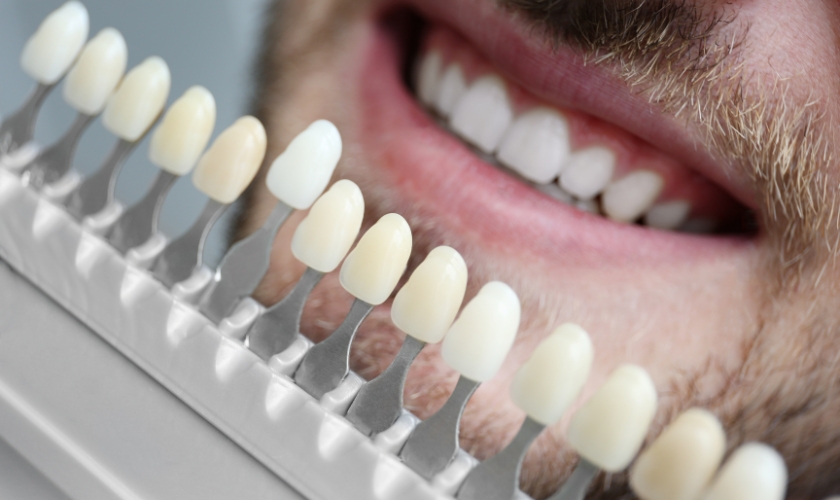
Shade selection matters. Veneers are custom-made shells that cover the front surfaces of your teeth; the color you pick affects whether the result blends in or stands out. These shells hide chips, stains, and other flaws. They also sit beside your natural teeth, so the tone needs to work across your whole smile. This guide explains the factors that shape color choices and how your dentist confirms the final shade.
Comparing Veneers Material Options
Material influences the shade you get. Veneers come in two main types; each handles color differently. Porcelain veneers mimic the translucency of natural enamel. This gives them a lifelike appearance that catches light much as real teeth do; porcelain resists stains better than composite in most cases. Composite veneers use a resin that a dentist sculpts directly onto the tooth; both options blend with surrounding teeth.
Shade matching starts with your existing teeth. A dentist studies the color of the teeth beside the treatment area; this comparison guides the target tone. Some patients want a bright, uniform look across the whole smile, while others prefer veneers that match nearby teeth closely, so the target shade shifts depending on the goal. Porcelain covers deep stains from aging or medications; it delivers a consistent shade even when natural teeth are discolored. The goal is balance.
Previewing the Shade Digitally
Technology helps preview results before treatment begins. Dentists use digital imaging to preview a new smile, and this process allows patients to select the veneer type and discuss color options with their dentist. Patients review the projected outcome and share their goals, so the dentist can refine the plan before work begins. Before permanently bonding the veneers, the dentist checks their shape, color, and fit. If the shape or color needs to change, the patient can tell the dentist, and the dentist works with the dental laboratory on the requested changes.
Keeping Your Shade Consistent
Care habits protect the color you choose. Veneers need routine brushing and flossing to stay in good condition, and a soft-bristled toothbrush with non-abrasive fluoride toothpaste works best. Avoid whitening products because they can scratch veneers. Porcelain veneers are stain-resistant. Dark-colored foods and beverages can stain them over time, and common sources include coffee, tea, red wine, berries, and other dark-colored foods.
Lifespan is part of the shade conversation. Porcelain veneers last 10 to 15 years with proper care and maintenance, and their stain resistance helps keep the color stable across that span. Composite veneers may require touch-ups every five to seven years. The maintenance timeline differs between the two materials, and a dentist can explain the expected lifespan of each option.
Talk to Your Dentist Today
Shade selection involves several factors. Natural tooth color affects the target shade, and the chosen material also affects the final appearance. A dentist reviews these factors with the patient, and the treatment plan reflects the selected material, shade, and desired cosmetic outcome. Talk to your local dentist today to learn more and begin preparing for choosing veneers that match your smile.
